

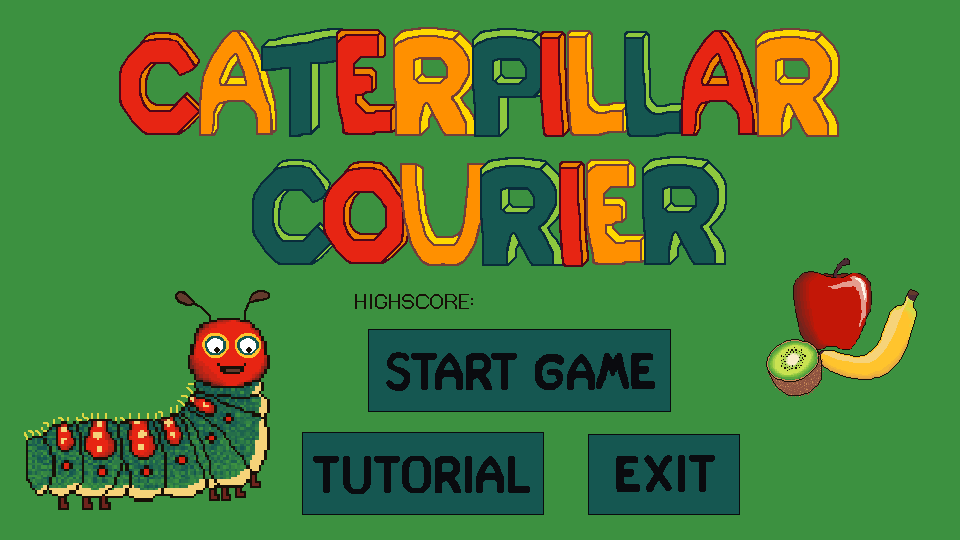
My partner and I joined our first game jam in April 2023, Ludlum Dare Game Jam 53 . We had no right to think we could actually make a complete game: we were two newbies who’d never done more than follow some tutorials or make some almost decent pixel art.
We didn’t think we’d be able to do this, and we certainly didn’t feel skilled enough to team up with others, but we wanted to give it a shot. So we just clicked that join button, and went for it!
And you know what? We kind of pulled it off.
The Ludlum Dare jams run for 72 hours. In the time zone where we were at the time, that meant the official jam start and theme announcement was on a Friday afternoon, and the build had to be uploaded by the Monday afternoon. The choice to join this jam in particular was a lot to do with timing, but also because it was famous enough that even two newbies like us had heard of it. It’s actually the world’s longest running online game jam, and has been held twice a year since 2002. It was a shame to see the jam was officially cancelled in early 2025, but it was later revived thanks to community support.
At first, we weren’t sure if the jam was even going ahead – we checked their Discord and saw a few posts from people asking if it was on, but no activity – was this normal? However, when Friday afternoon came, we found the jam start announcement, came up with a game idea and we were off!
We had agreed to throw everything at it, and so we did. Eat, sleep, dev, repeat. Except that we didn’t have much sleep, staying up late working on the game, and getting up early the next day to jump straight in again.
I put the approach I’d came up with to the test: Frankensteining two simple, classic games together, and being forced to try to make it work by the looming game jam deadline. I knew the jam would require me look up new techniques and fixes, to learn how to do make new mechanics. The approach more or less worked, but it wasn’t easy. There were so many things I didn’t know about making games. I looked a tutorial for basic snake mechanics, and followed that. Then I did the same for memory game mechanics. But there is so much stuff that needs to go around the core mechanics to make an actual game, and for that I relied on forums, flooding them with annoying newbie questions (remember this is just before mainstream use of AI). My Frankenstein code (unsurprisingly) had a bug, and when I tried to fix it, I made things worse. I didn’t have the depth of knowledge or experience to know what consequences my fix would have and how to avoid them. What might be a tiny set back to an experienced dev can seem impassable at first when you have so little experience and zero track record to know that you can actually make a game.
There were many times through this process when I thought “we’re not going to make it”, but this is the big one that sticks out for me. I felt like I’d completely broken the game, and we weren’t using Github back then (we probably didn’t know what it was), so there was no way to recover a previous version. This was it: time to call it and admit I couldn’t make a game after all.
I took a break, while my partner kept churning out art assets for the game in case I managed to get it working. After a while, I got back on it and managed to fix the game-breaking bug with a couple of hours to spare before the submission deadline.
There were still a few bugs: the game didn’t always register when the player picked up a fruit, and if fruit spawned inside the snake the whole thing could bug out completely, which was more likely to happen the further you got. But we had a somewhat working game, and I honestly didn’t want to touch it anymore in case I broke it again.
How “I Can’t Do That” Holds You Back
Was this a fully formed, completely original, bug-free game jam winner? Of course not. But just a few weeks (and even days) before, I’d been stuck in tutorial hell, convinced that I’d never be able to make a game, and here we were pushing submit on a game jam.
I think there’s a lesson here about all the things you don’t do because you think you’re incapable. Imposter Syndrome is really and it can get in the way of giving things a shot. Trying and failing is such a crucial part of learning and growth, but we often feel we shouldn’t attempt something if there’s a chance of failure, which is just crazy. How many great things would the world be without if people had just assumed they couldn’t make them and didn’t even try?
Our little Caterpillar Courier game is proof that assumption can be wrong. I’d realized I’d much rather make a buggy little game by myself than a hundred polished tutorial copies. This was a crucial step in our game dev journey: it was a fundamental shift from being a learner who doubted they would ever make something to a creator who now had. If I’d never taken that leap, I might never would have pursued game dev.
The game’s a bit wonky, it’s super simple, and it’s about as far from polished as you can get. Entering a game jam was stressful and it feels like time is constantly against you, but it forces you to find quick solutions to get a workable product. And that product is a game that we made ourselves, and that still makes me proud today.
If you’re interested, you can still see the raw game on Itch and check back next time to see where our new-found game dev skills take us next. We’re going to shift to posting blogs fortnightly from now on. While we’ve gotten some interest in our little game dev journey, which we really appreciate, the level of interest doesn’t seem to warrant weekly posting.
Leave a Reply