

We came to an important realization: gamedev is hard! Though we’d had to pull the plug on our last game jam because we just didn’t have the skills and experience to execute our vision, we still had a dream: get something up on Steam. We decided to take a break from game jams to focus on a simple game idea and just go for it. See what happens.
At this point, we still had some income from soul destroying freelance writing work, but we could see the writing was on the wall (no pun intended) for that industry, with all the chatter about AI. And in any case, what we really wanted to do was something creative, something with a purpose: making meaningful games.
The game idea was fairly small and straightforward (or so we thought): it was narrative-based and would play in one (big) space. As we started to flesh the idea out, it became obvious that this game needed to be in 3D, not the 2D world we’d been developing so far. We’d been working on developing our skills for a while at this point – I’d been focused purely on pixel art but with a background in traditional art, while my partner was skilling up in programming and game design. But we thought if we worked hard enough and put our minds to it, we could pull off anything – so why not learn 3D modeling?
Was this overly ambitious, naive even? Without a doubt. Had we learnt nothing from the game jam experience that clearly showed the gap between ambition and execution? Probably. But you have to give us credit for trying, right?
I started to dabble in Blender (awesome free, open-source 3D graphics software), doing some tutorials to make a few simple models. But we quickly realized it made more sense to divide and conquer – my partner would make the models and I would work on the textures and materials. He was also getting a bit disheartened with programming at this point, and I thought he’d enjoy the creative aspect of model building.
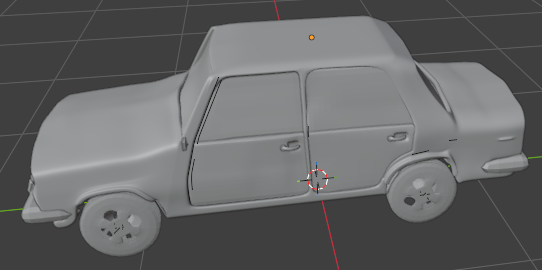
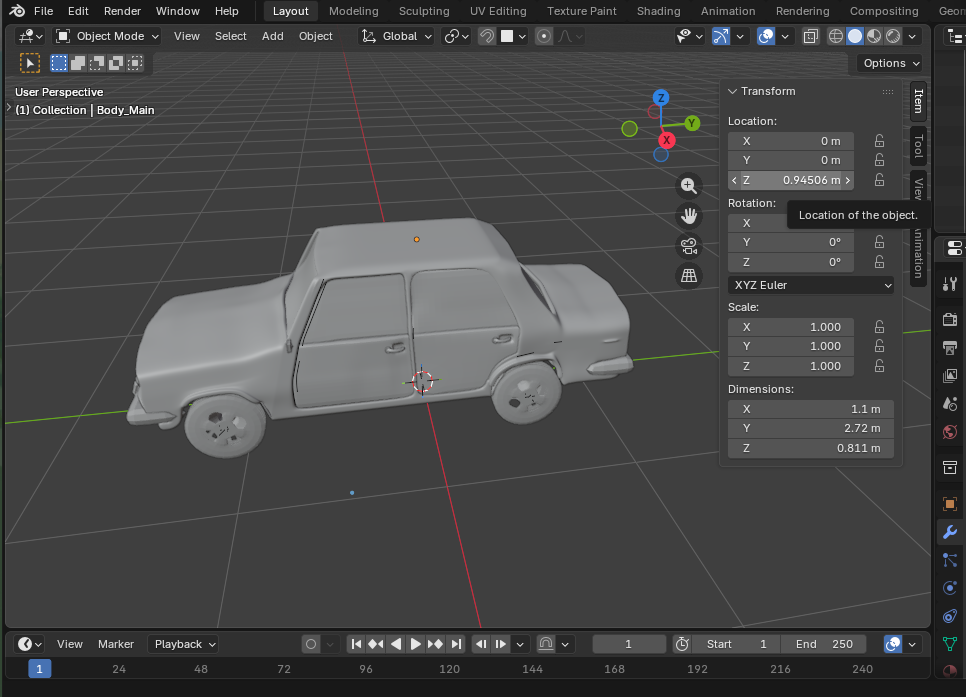
So we jumped in, but before we realized what was happening, we’d arrived in tutorial hell, round two. My partner was watching loads of tutorials online, making models, following along with epic 5-hour step-by-step tutorials. Not wanting to go down the same tutorial hell path as he had with programming of just copying, he started to experiment and make models by himself. He made a nice looking lantern post, then a trash can, and some traffic lights. Making a whole car seemed intimidating, but he gave it a shot, and the car actually turned out pretty decent. Sure, it wasn’t perfect, but it wasn’t bad at all.
Reality Check: The 3D Modeling Pipeline
Beyond the models themselves, there was textures and materials, which I started looking into. There were aspects of making textures that felt very familiar, such as digital painting surfaces. But then there was UV unwrapping, normal maps, node trees, texture baking, and all kinds of technical aspects that I’d had no idea how complex they’d be. We bought some textures online, but applying them also takes skill, and these high quality textures made it even more obvious when the models weren’t perfect! And then there was the whole world of low-poly and high-poly and what all this would mean for game performance. It was a lot to get our heads around all at once.
Blender, and 3D modeling in general, can seem deceptively simple. All you need to do is start with the default cube shape, then manipulate it into any shape you want by using a few modeling tools. You can also work your model using sculpting tools, where you work more like a digital sculptor, by adding mass and then carving it away to create organic shapes from faces and hair to fantasy creatures. But there’s a lot more to it than that: once you’ve made your model, the next step is to UV unwrap it. This is like peeling the skin off a 3D model and laying it flat, kind of like a flat pack box, so you can paint on it without warping the texture. Then you need to apply the texture itself – applying the surface picture or texture that shows what the model will look like: not just colors but also roughness and bumps.
You can also set the material of the object, playing with factors like reflectivity and transparency to make it look like anything from metal to water. For some objects you should apply textures, for others materials, but often you want to use a combination of both.
Next, there’s animation – you can rig your object kind of like a marionette, building an underlying skeleton structure of bones and joints and then moving the skeleton to animate it. To finish the process you need to set lighting and render it so that Blender calculates everything to create the final image (or video animation). Each of these aspects is its own discipline, and people build careers specializing in just one of these steps.
As much as we both tried to resist tutorial hell, we kept going back to tutorials – we had to: we didn’t know any of this stuff. And most recommended tutorials on YouTube tell you how simple it is to make a doughnut, while omitting the complexity behind the whole process. They are often from people who’ve made hundreds of models, are their work is stunning. We even saw a whole 10 minute animation that had been made in Blender. This was somewhat inspiring, but mostly discouraging when you’re trying to work out how to delete a single edge without deforming your entire model, or how to reduce the number of polygons your model has. And why is this bit not reflecting the light like the piece next to it does?
We found a course online and decided to take it. It explained that we should make a ‘light studio’ as a first step and put each of your models in the studio so that when you baked in the textures, all the models would have the same lighting. We should have done this sooner: we felt like we were finally getting somewhere. Maybe if we kept learning, we could actually make some money from making 3D models? This could be a great income source while we developed our own game.
It just goes to show how, when you have little to no background knowledge or experience, things can be so much more work than you thought. This is especially true for video games, which seem easy to make, but have so much underneath the surface that you see. This feels like deja vu, and it was: we’d already hit the beginner’s issue of not knowing how much we didn’t know, and we probably will again in the future. Luckily, you’re never too old to learn!
The takeaway: 3D modeling is a skill that takes a long time to master, if you want to produce professional results. See how our journey develops in the coming blogs.
Leave a Reply