

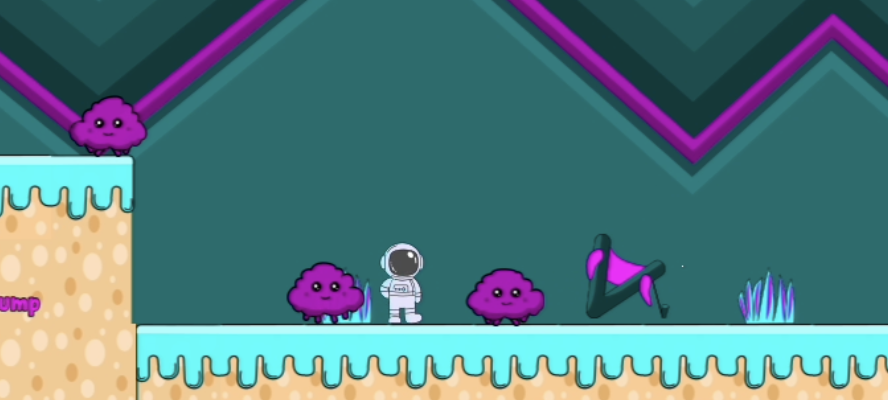
A couple of years into game dev, our journey had already taken a fair few twists and turns, and with it, my art style. Coming from a traditional art background, I first dove into pixel art, before we pivoted to 3D models, and then eventually back to 2D art. This was great from certain points of view: one of the best things about trying different styles is that you get first hand experience with each, and have a realistic idea of what they involve. When we decided to go back to 2D art, I already knew that pixel art wasn’t the way forward.
Pixel art has its pros and cons compared to vector or hand drawn 2D art. Pixel art is timeless, and is synonymous with video games. However, what clinched it for me is pixel art can look awesome, but takes a lot of work to get there. Vector and hand-drawn 2D art takes a lot less time investment (and skill development) to make something that looks good.
After some research, I decided on vector art because it seemed the easiest to skill up quickly and be able to create a clean, professional-looking aesthetic. (I made one more switch to hand-drawn art, though that came later, and I still use vector art on occasion alongside the hand-drawn stuff.) Specifically, I chose Inkscape because it is open-source and pretty beginner-friendly (and I’d still recommend it).
But it also meant that I was essentially starting from zero again, and had pretty limited technical knowledge in Inkscape or even vector art when we decided to make a game for the Godot Wild Jam 68. After some failed team efforts, we decided do the jam with just the two of us. So while my partner focused on programming and game design, I would be in charge of making all of the assets, along with the technical art. We’d have 9 days from the theme announcement to the jam deadline to come up with an idea, make everything, and turn it into an actual game. And at the start of the jam the only digital art I’d really ever made was pixel art (and my pixel art efforts had been average at best).
Now, at this stage you might be thinking, why the hell did I think I would be able to make art for a whole game, even a simple game jam one, if I didn’t know how to use the program? Well, in my defense, I had started learning to use Inkscape a couple of weeks earlier, doing some YouTube tutorials and making some shapes.
But when the jam started and I sat down to make assets, I realized I barely knew how to do anything. Like how do you even make a triangle in Inkscape? I hadn’t covered that yet. This is another advantage of projects like game jams – it makes you aware of the gaps in your skills pretty quickly. And, suffice to say, I had a lot of gaps. Even relatively simple programs like Inkscape can feel pretty overwhelming, full of tools and hotkeys that I didn’t know yet.
So I had to learn, starting with triangles and making my way up from there. This mostly involved a few tutorials and a lot of messing around in Inkscape. Inkscape’s built in tutorials (you’ll find them under the Help menu — “Tutorials”) are actually super useful, and walk you through the basic functions in a clear way, including little exercises to practice what you’re learning.
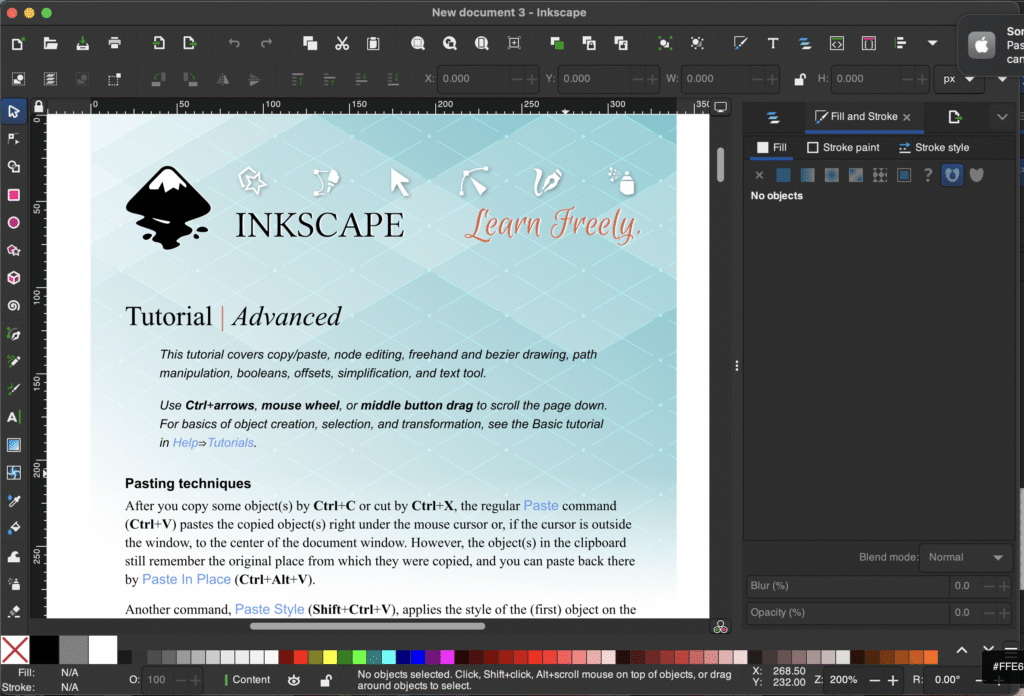
I have to admit, it wasn’t smooth sailing at all – this was a super stressful week. I also had more than a couple of imposter syndrome moments – that voice in my head that kept asking why did I think I’d be able to do this? In the same 8 days, I had to learn about technical aspects like tile maps, particles, and parallax backgrounds, both in terms of making assets and implementing them in Godot.
Regular readers of this blog may be spotting a theme here: my partner and I do have a tendency to jump in to overly-ambitious projects with what could be considered an extreme level of naivety. This wasn’t the first time we said “sure, why not? Other people can do this, why can’t we?”
But maybe this isn’t actually as stupid as it sounds – maybe this is actually a really great way to overcome fear and self doubt. Rather than stopping to think “can we actually do this” just give it a shot, and see what happens, before you have a chance to talk yourself out of it. And if you’re someone prone to perfectionism-driven chronic indecisiveness, there’s nothing like the looming deadline of the end of the game jam to help you get over yourself and just do it. Especially if you have another team member relying on you (and constantly bugging you for assets).
Because in the end, the result was, well not amazing, but not half-bad. I made a full set of game assets including a tile map, characters with sprite sheets, as well as interactable and non-interactable objects. There’s a double-layered parallax background, a clunky animation or two, and even some very minor VFX (a dust particle effect when the player lands). Not bad for a sole artist in 9 days while learning both Inkscape and Godot almost from scratch.
You can play the game on Itch if you don’t believe me. Warning: it’s a bit clunky, and there’s some screen resolution issues, but I still stand by it as a solid little game made by two devs working in Godot for the first time.
Looking at it now with everything I’ve learnt since, sure, it’s a nightmare of design and readability. The scene and assets have no depth and there’s nothing directing the eye to where it should be, like platforms. Don’t ask me why I decided to make the background mountains the most eye catching part of the scene when they should be blending in. Well I know why, because I thought the stripe pattern looked cool – I hadn’t yet learnt that good art, especially game art, is not just about making stuff look nice. And let’s not even talk about that migraine-inducing color palette of full-saturated colors.
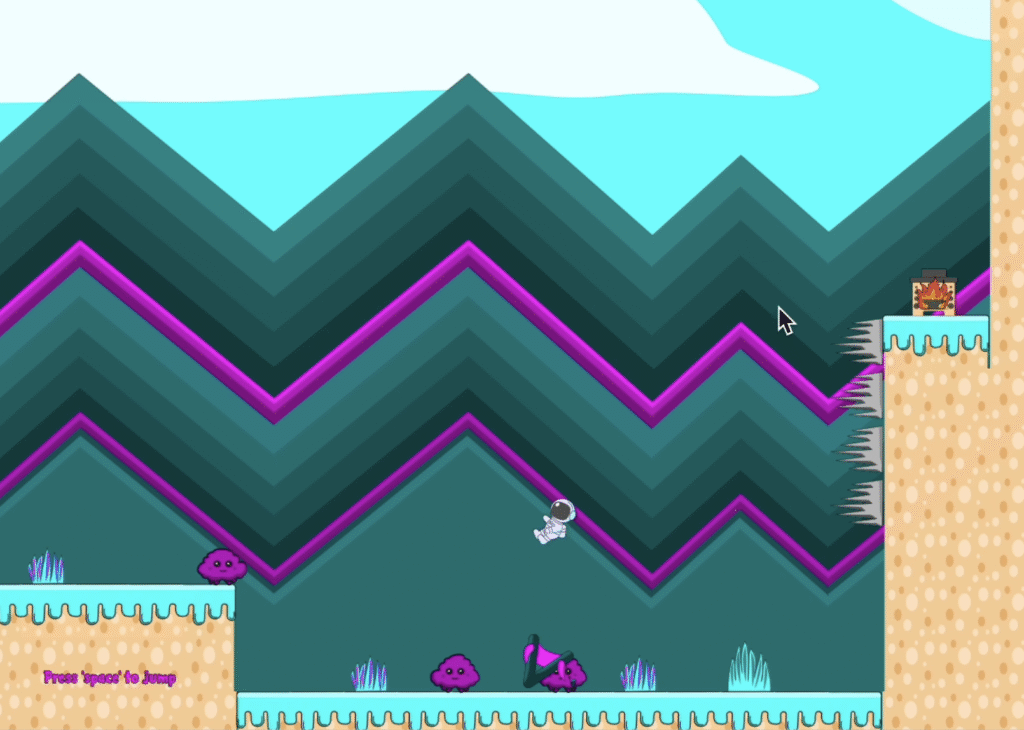
Having said all that, the aesthetic is clean and cheerful, and the characters are actually pretty cute. But most importantly, I pulled off something that might have seemed crazy at the beginning of the jam. It may not be the best game art in the world, but it works (more or less).
One of the biggest lessons I’ve learnt over this whole journey is how achievable things can be, even things that seem to be part of some exclusive realm that you think you could never be a part of. Before all of this, I thought of digital art as being a mystical domain that I would never be able to master. I certainly didn’t think I’d ever be able to make a video game. But we did it – in a small, modest kind of way.
And it was only up from there (in a gradual, non-linear kind of way). So just jump in, and see where it gets you. No matter what happens, it’ll be better than staying on the sidelines.
Leave a Reply